



One Small Gym Mistake That’s Quietly Hurting Your Progress
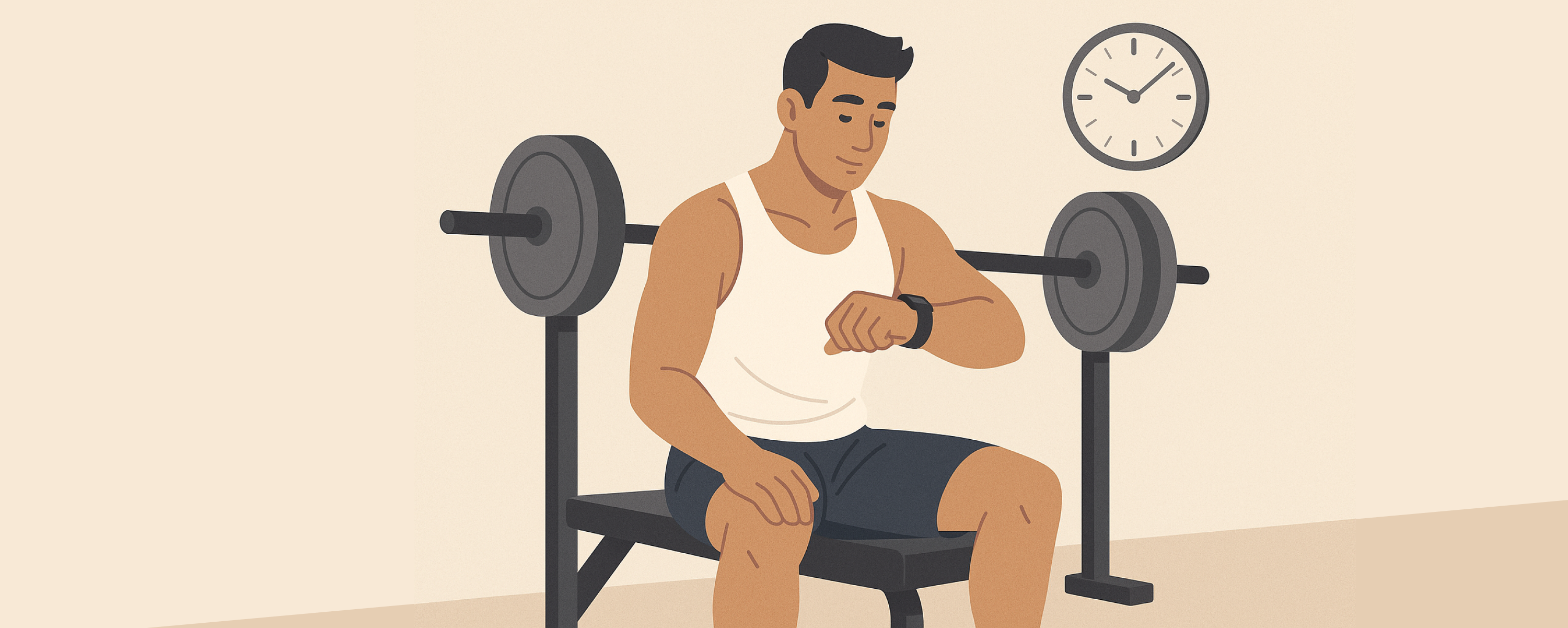
Many people keep their rest periods short during strength training because it feels productive. Your heart rate stays up, your muscles burn, and the workout feels tough. While that intensity can be motivating, research shows that how long you rest between sets really affects your results.
But what actually happens when you change your rest period, and why does it matter so much for your progress?
Why Rest Between Sets Matters

Every strength exercise uses up energy stored in your muscles. Between sets, your body needs a bit of time to replenish that energy so you can lift with good form and the same weight again. If you rest too little, your next set is often limited by fatigue rather than strength. This usually leads to using lighter weights, doing fewer good reps, and lower overall training volume.
This is a common habit. Many people cut their rest short to keep the workout feeling intense or to save time. While these habits can make the workout feel harder, they actually slow down your progress. Strength training works best when you can challenge your muscles with good effort and technique, and enough rest helps you do that.

What Research Shows About Rest Periods
Researchers wanted to find out how much rest between sets mattered. They set up an eight-week strength program to see how rest timing affected results, and split participants into two groups. Both groups did the same exercises, sets, reps, and intensity. The only difference was rest time: one group rested for one minute between sets, while the other group rested for three minutes.
At the end of the study, when compared to the short-rest group, the group that took longer rests:
-
Gained more strength
-
Gained more muscle mass
-
Saw an equal increase in muscular endurance

So, taking more time to recover didn’t hurt their conditioning. Instead, it helped them lift heavier and keep up their performance, leading to better progress overall.
It turns out rest timing is not a small detail. It shapes how your muscles respond to training and how you can best challenge yourself throughout your workout.
How Much Rest You Actually Need

Most people get better results by resting for more than a minute between sets, especially if they want to build strength or muscle. That extra rest lets you use heavier weights that feel challenging, instead of being held back by lingering fatigue.
Here are a few things to try during your next workout:
-
For larger muscle groups, such as legs, chest, and back, rest for 2-3 minutes between sets. They tend to require more recovery because they involve more total muscle mass and higher effort.
-
For smaller muscle groups like the arms or shoulders, rest for about 90 seconds between sets. They recover a bit faster.

When in doubt, let your last set guide you. Rest until you feel ready for the next set without feeling tired. If your breathing is back to normal, your grip feels strong, and you’re ready to lift the same weight or close to it, you’ve probably rested enough. Many people are surprised at how much stronger the next set feels when they give themselves that extra time.
Pay attention to performance across your workout. If your weights drop quickly or your reps fall off more than expected, your rest periods may be too short. Even a 30-second adjustment can make a noticeable difference in the quality of your training.
Progress On Your Terms

How much you rest between sets really can shape your results in the gym. Giving yourself a bit more rest lets you lift stronger, keep your form solid, and build more strength and size over time.
That said, life can get busy. If you need to keep your workouts short and can't take long rests every time, that's okay—you're still showing up and putting in the work, and that matters most. Try playing with your rest timing over your next few workouts. Notice how your energy, strength, and enjoyment shift, and remember that every bit of effort counts toward your goals.