

Plant vs. Animal Protein: Can Vegetarians Get the Same Gains as Meat-Eaters?
Picture two people finishing the same workout.
One leaves the gym thinking about a chicken breast and rice. The other is already planning a bowl of lentils, quinoa, and veggies. Both trained hard. Both want to build muscle.
You’ll hear that animal protein is “complete,” plant protein is “inferior,” or that vegetarians are fighting an uphill battle when it comes to muscle and strength.
The argument fuels endless gym debates, comment-section arguments, and nutrition hot takes.But one question hangs in the air every time this comparison comes up:
Can you really get the same results without meat?
Before choosing sides, it helps to understand what protein actually does in the body…
Protein Quality Starts With Amino Acids
Your body breaks down protein into amino acids. Think of amino acids as an alphabet with just 20 letters. These letters join together to build all your muscles, enzymes, and structural proteins.

Each protein source comes with its own unique mix of amino acids. Some amino acids are key to muscle building, much like vowels are needed when forming words.
Of the 20 amino acids, 9 are considered “essential amino acids.” Essential amino acids (or EAA’s for short) are amino acids that the body cannot build on its own. They must be consumed in food.
All animal-based proteins have all 9 essential amino acids. With a few rare exceptions, most plant proteins contain some, but not all, of the essential amino acids. That is why people who eat plant-based diets often need to eat a variety of foods to meet their needs.

What Happens When Total Protein Is High Enough
On paper, these differences might make animal protein seem much better for muscle growth. However, studies with real people show that plant protein can work just as well.
Multiple studies have compared plant-based and animal-based protein diets while keeping total daily protein intake the same and ensuring plant-eaters get all the EAA’s they need. These studies typically use protein intakes around 1.6 to 1.8 grams per kilogram of body weight, which is a common target for muscle growth.
When protein intake is matched, both groups build very similar amounts of muscle and strength.

Even though plant protein has fewer amino acids per serving, it can still give your body what it needs if you eat enough and get variety to ensure you’re getting all EEA’s. Building muscle depends more on total protein and regular training than on whether your protein comes from plants or animals.
The Plant Protein Challenge
The main challenge with plant protein is the practicality of getting enough.
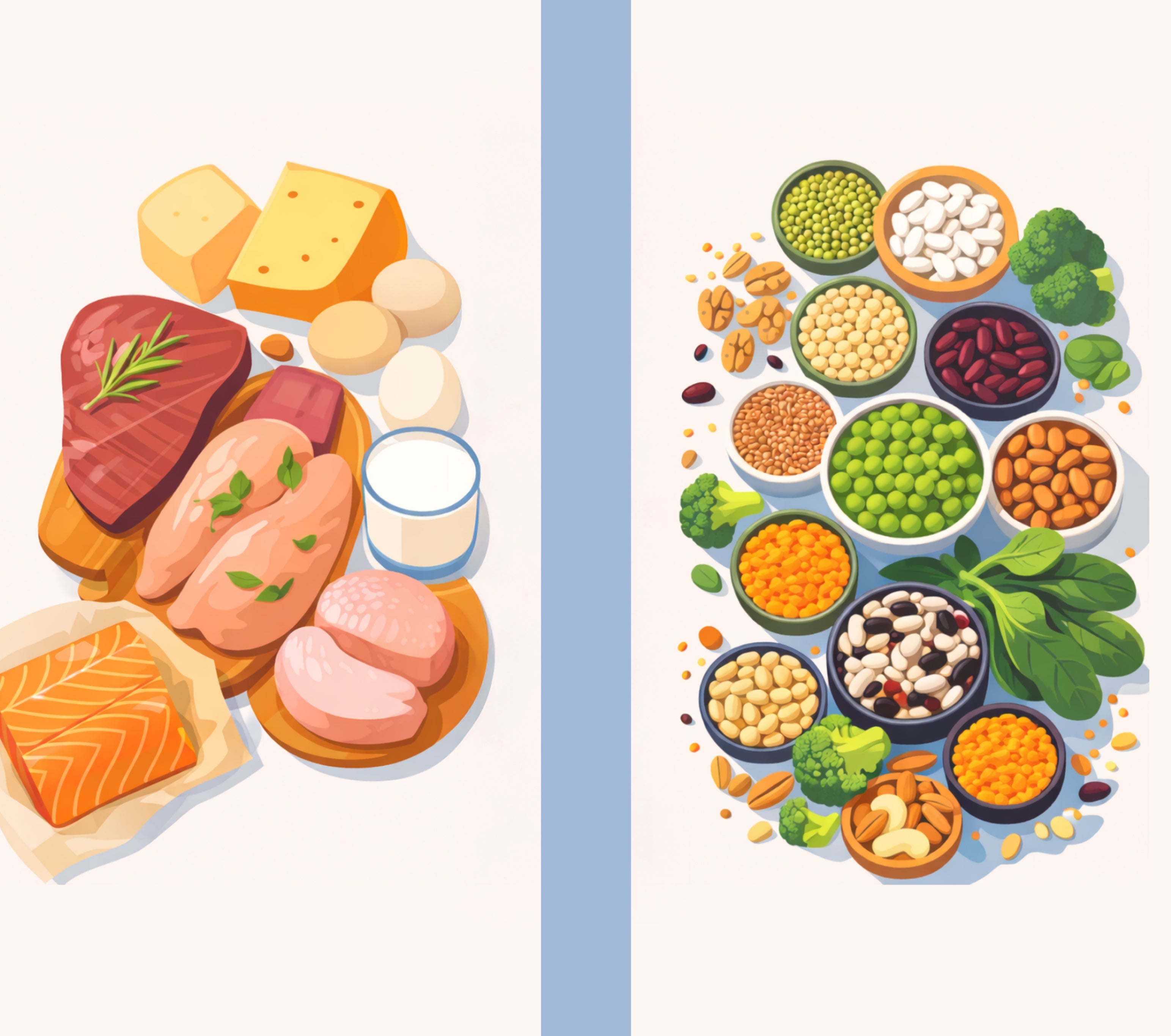
Most plant protein sources contain fewer grams of protein per calorie. For example, a 6-ounce steak has about 40 grams of protein. To get the same amount from lentils, you would need to eat four to five cups. That does not make lentils a bad choice. It simply means you may need to eat more food to hit your protein goal.

If you are trying to eat around 150 grams of protein a day, the difference is clear. It is usually easier to reach your goal and get all the essential amino acids with animal protein. With plant protein, you may need to eat more food, plan your meals more, and pay attention to how you spread protein throughout the day.
Protein Quality Is Only One Part of a Diet
It is important to remember that this discussion is only about protein quality (amino acid profile and protein per serving) and muscle-building results.
A healthy diet also includes things like vitamins, calories, nutrient absorption, food variety, and how sustainable it is over time. Just matching protein intake does not make two diets equal in every way.
To truly compare a vegan diet with an omnivorous one, you need to look at more than just protein.
Choosing the Right Protein for You
Animal protein is more efficient because it gives you more essential amino acids and total protein in each serving. For most people, this makes it easier to meet higher protein goals.
Plant protein can also help you build muscle if you eat enough. You just need to plan more, eat bigger portions, and include a wider variety of foods to reach your goals.
The best protein choice is the one you can consume consistently while supporting your overall diet and lifestyle. Muscle growth is built on long-term habits, not perfect amino acid math. Focus on total protein intake first. From there, choose the sources that make it easiest for you to stay consistent.