



Fat Loss vs Muscle Loss: Which One Are You Losing?
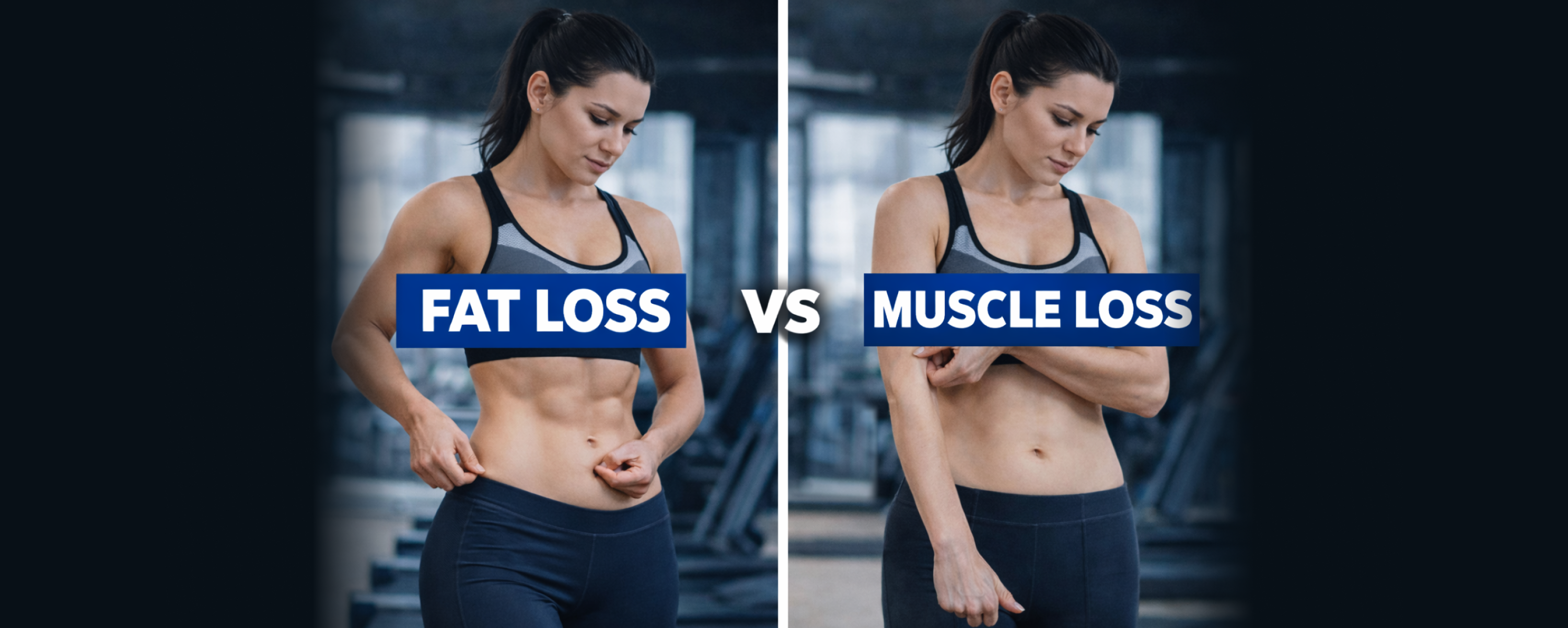
Most people think weight loss is simple. They think that all you have to do is eat less, move more, and watch the number on the scale drop. And sure, that works. But the problem is the scale doesn’t tell you what you’re losing.
The truth is you can lose weight and feel stronger, leaner, and more energized OR you can lose weight and end up weaker, slower, and stuck with a sluggish metabolism.
The difference comes down to one thing: are you losing fat, or are you losing muscle?
What “Better” Weight Loss Looks Like
When you diet, your body doesn’t just burn fat. On average, about 25% of weight loss comes from lean mass—muscle— while the rest comes from fat.
That’s not ideal.
Beyond its aesthetic appeal, muscle is a metabolically active tissue that plays a vital role in maintaining your basal metabolic rate, overall strength, and long-term physical performance.
While most diets result in muscle loss, the right training allows you to increase your total muscle mass even while in a calorie deficit. By building this new tissue, you aren't just protecting your metabolism—you're actively upgrading it.
The Study: Cardio vs Weights vs No Exercise
A recent study followed 300 adults on a calorie-restricted diet who self-selected into one of three exercise modalities:
-
No exercise group
-
Cardio group (150–250 minutes per week)
-
Resistance training group (2–3 times per week)
All the participants followed the same diet, they just took different training approaches.
The results are where things get interesting.
1. Everyone Lost Weight
The first surprise was that over the course of 18 months, all three groups lost a similar amount of total weight.
-
The No Exercise group lost between 7 and 18 pounds
-
The Cardio group lost between 7 and 14 pounds
-
The Resistance Training group lost between 8 and 12 pounds
So if you’re only looking at the scale, cardio and lifting seem to be about equally effective. But that’s only part of the story.

2. Resistance Training Led to More Fat Loss
The important differences showed up when researchers looked beyond just weight loss at body composition. They found that:
-
Resistance training = most fat loss
-
Cardio = moderate fat loss
-
No exercise = least fat loss
These results show the difference between getting lighter and getting leaner.

3. Lifting Helped Preserve (and Even Build) Muscle
Here’s the biggest takeaway:
-
Resistance training → increased lean mass
-
Cardio → slight decrease in lean mass
-
No exercise → larger decrease in lean mass
It’s important to note that cardio doesn’t “cause” muscle loss. The study found that cardio on its own wasn’t enough to fully protect muscle during a calorie deficit. On the other hand, resistance training provided the stimulus needed to preserve, and even build, muscle mass.

Why This Matters
The biggest takeaway from this study is that even though all three groups lost weight, the way you exercise impacts how much fat vs how much muscle you lose.

So, Should You Still Do Cardio?
Of course! Cardio still plays an important role in overall fitness and weight loss.
It’s great for:
-
Burning calories
-
Improving cardiovascular health
-
Supporting overall activity levels
But when it comes to maintaining muscle during weight loss, cardio alone won’t cut it. The better approach is to use resistance training as your foundation and layer in cardio as needed.
Finding the Balance
You don’t need a complicated training plan to start seeing better results. Start by focusing on the basics:
-
Lift weights 2–3x per week
-
Prioritize full-body movements
-
Progress gradually over time
-
Maintain a moderate calorie deficit
The Bottom Line
The scale only tells part of the story.
If you’re losing weight without resistance training, there’s a good chance you’re also losing more muscle than you need to.
Resistance training helps shift that balance toward losing more fat, keeping more muscle, and seeing stronger overall results.
If you want better outcomes, don’t just move more. Lift smarter.