

Stop Stressing About Protein Timing—Unlock Greater Gains With This Proven Approach
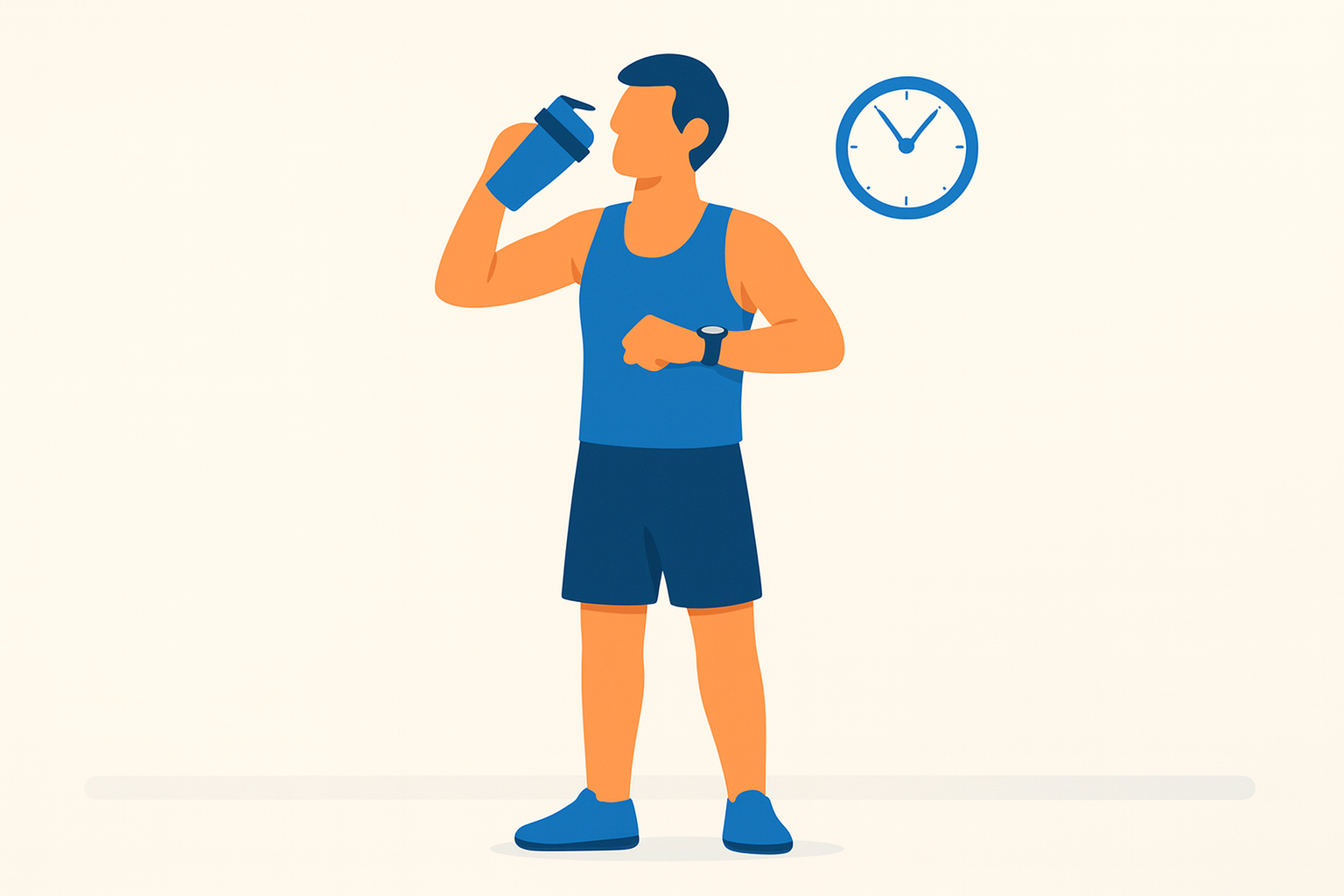
Many weightlifters talk about the anabolic window, which is the time right after strength training when you’re supposed to have protein.
A lot of people think this window lasts about 60 minutes and that having protein during this time helps you build more muscle than if you wait an hour or two. But do you really need to time your protein carefully to get results?
Challenging the Status Quo
In 2013, a small group of researchers published a meta-analysis examining the existing literature on the so-called anabolic window. They collected and analyzed 43 different studies that all examined protein intake and timing.
After completing the analysis, they noticed a trend across the data. The trend showed that as long as you get about 0.7 grams of protein per pound of body weight each day, the timing of your protein doesn’t seem to change your muscle gains.

The researchers confidently concluded that the anabolic window isn’t something you need to worry about.
This fits with what we know about muscle protein synthesis, which peaks 24 hours after you lift weights and, depending on your fitness level, begins to taper off, lasting for up to 48 to 72 hours. If there were an anabolic window, it would last days, not just hours.
So then, how did it become a popular idea in the first place?
The Rise and Fall of The Anabolic Window
The idea of the anabolic window became popular for a reason.
In the 1990s and early 2000s, researchers studied what happened when people had protein and fast-digesting carbs within 30 to 60 minutes after exercise. They noticed that this seemed to boost recovery and muscle growth.
In 2004, Ivy and Portman published a book called Nutrient Timing that brought all this research together and made the term 'anabolic window' well known.
The problem with the vast majority of these studies was this: they primarily used test subjects who trained in a fasted state or had methodological limitations (such as small sample sizes or uncontrolled variables).
If you want to build muscle, you probably aren’t training fasted, because let’s face it, it’s exhausting.
After a meal, your body circulates the nutrients from that meal for 3 to 6 hours. So, on a normal training day, you’re still getting nutrients from your last meal during and after your workout, making the fasting conditions in those studies less relevant to real life.
Because of this, most of these early studies about the anabolic window didn’t really apply to how people actually train.

It’s Not About Timing, It’s About Quantity
Since the 2013 breakthrough meta-analysis, more researchers have conducted studies confirming that the anabolic window is a myth.
It doesn’t matter if you have protein before or after your workout, or if you’ve eaten protein recently. As long as you get enough protein each day, your muscle size and strength will improve the same way.
So, the next time you finish a workout, don’t worry if you forgot your protein shake or don’t feel like eating right away. You actually have a lot of flexibility. Just make sure you reach your protein goal and stay consistent.