



Cardio Before or After Lifting? The Answer Matters More Than You Think
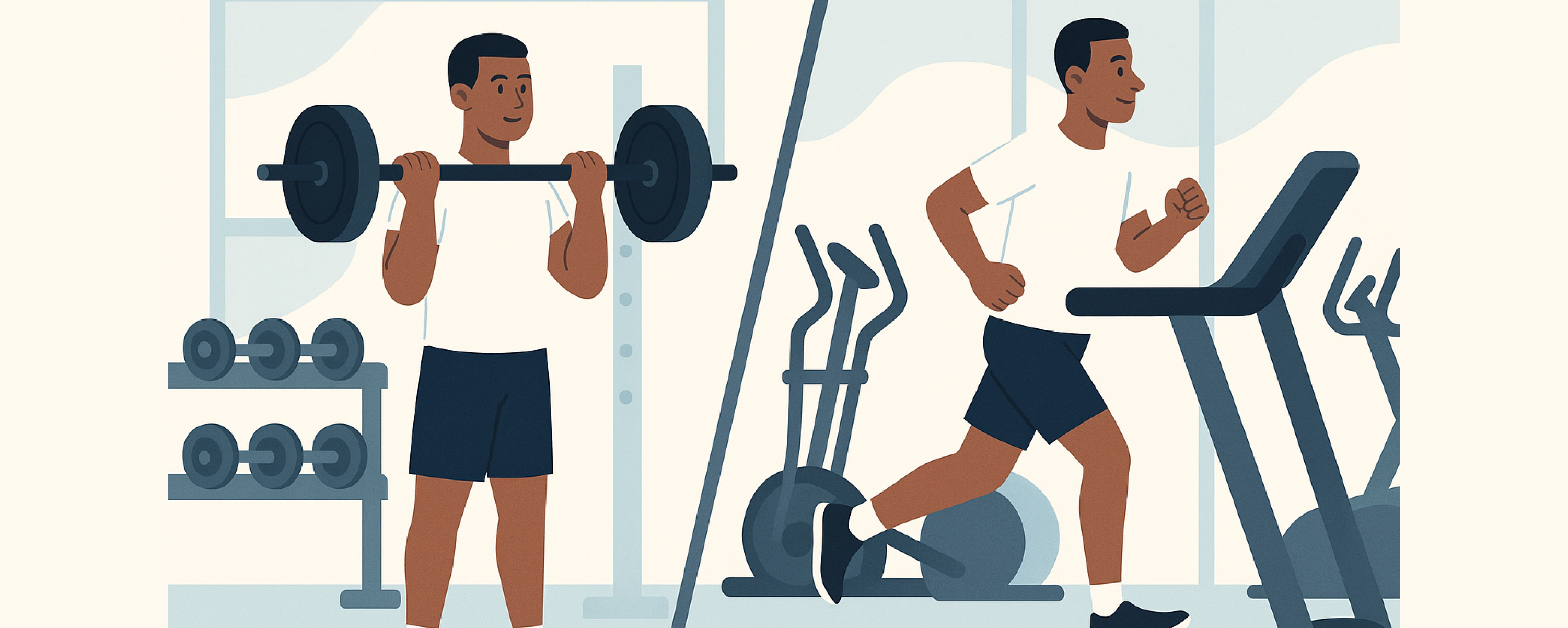
Many people try to fit both strength training and cardio into the same workout. It sounds simple until you start wondering which should come first.
You may have heard that doing cardio first can tire you out. You may also have heard that doing it after lifting can slow muscle growth. So what is the right move?
If your goal is to build muscle, the good news is that you can combine both training styles while still getting stronger. You just need to understand how each one uses energy and how the order can shape your workout.

How Cardio and Lifting Affect Your Body
Strength training and cardio create two different types of stress on your body. Strength training is considered anabolic, which means it promotes a building state. Your body is more focused on repairing and rebuilding after a lifting session.
Cardio leans more toward a breakdown state, often called catabolic. This is not a bad thing—it simply means your body is using stored energy to keep you moving.
The challenge comes when these two signals compete during the same workout. Excessive fatigue on either side can affect performance and recovery.
What Happens When You Do Cardio Before Lifting

Both cardio and strength training require energy. When you start your workout with cardio, especially anything beyond a light warm-up, you begin using the energy and focus you need for your lift.
Research shows that moderate or intense cardio performed first can reduce strength performance.
Many lifters notice they can’t move as much weight or complete as many reps after longer bouts of cardio. The part of the workout that relies most on power and coordination becomes harder.
A short 10-minute warm-up is helpful. Anything past that can escalate into a more intense session and make it more difficult to get the most from your lift.
Why Doing Cardio After Lifting Works Better
Saving cardio for after your strength session helps you stay strong when it matters most. Lifting benefits from fresh energy, steady focus, and stable form.
Cardio, especially lower-intensity forms, is more flexible. You can still get solid conditioning work even when you are slightly tired.
There is one detail worth understanding. Research suggests that longer cardio sessions, often above the 30-minute range, may interfere with muscle-building signals that are active after lifting.
This does not mean cardio is harmful. It simply means that keeping post-lift cardio on the shorter side tends to support better balance between strength work and conditioning.
Shorter, steady efforts appear to pair well with strength training for most people, especially when overall recovery is strong.

How to Combine Cardio and Lifting in a Single Workout
If you want a simple formula that works for most training styles, follow these steps.
-
Start with strength training. This gives you the best chance to lift with good form and consistent energy.
-
After your lift, add a short cardio session. Aim for about 20-30 minutes. This range keeps you active without pushing far enough to interfere with your body’s post-workout rebuilding process.
-
Choose lower-intensity cardio activities that let you move steadily without heavy strain. Good options include incline walking, light cycling, or comfortable stair climbing. These activities raise your heart rate without adding too much fatigue to the muscles you just trained. Save sprints or intense intervals for a separate day.
-
Support your body with simple nutrition and recovery habits. Many people train best with a small meal one to two hours before working out. A mix of protein and carbohydrates provides steady energy for both lifting and cardio.
Quality sleep also helps you get more from both sides of your training.
Following this approach lets you build strength and improve conditioning without feeling pulled in two different directions.
Putting the Pieces Together
Most people do not need to separate cardio and lifting into two separate workouts or times of day. That schedule can work, but it is not required when your training is structured well.
If your goal is to build muscle while doing some cardio in the same workout, lift first. This allows you to use your energy to lift well. Add steady cardio afterward, and keep it relatively short to ensure you don’t interfere with your body’s ability to recover from lifting.
Over time, this approach helps you grow stronger, while still reaping the health benefits of cardio.